Traditional conversations about relationship compatibility often get stuck on the question: “Are we a match?” This mindset tends to flatten two complex people into static categories, watering down real human connection to a binary yes or no. Relationships, though, are much more than a sum of parts. They live and breathe in the shared space between two partners. In this collaborative field, patterns emerge that neither person demonstrates alone. Enter the concept of the Third Entity, a concrete, calculable relationship behavioral framework that steps beyond the limits of traditional compatibility.
Core Takeaways
- Old models of compatibility only consider each person, missing the unique patterns formed together.
- The Third Entity calculation blends two numerology profiles to map your relationship’s shared behavioral signature.
- Focusing on the Third Entity helps address recurring communication cycles and growth edges that don’t map to either person individually.
- This approach validates your actual experience, bridging the gap between individual strengths and relationship reality.
- Knowing your relationship’s “number” lets you time important conversations and honor distinct needs.
Why Do Old Compatibility Models Let Couples Down?
Old compatibility models let couples down because they usually compare two separate people instead of studying the relationship pattern those people create together. A checklist can say your signs, types, or habits match, yet still miss the tone of your arguments, the rhythm of repair, and the pressure points that appear only when you are interacting. Countless systems define “compatibility” by cross-referencing zodiac signs, personality types, or even favorite hobbies. This kind of model rarely accounts for what partners become when together. It can leave couples wondering why they run into the same arguments despite scoring as a perfect match, or why attraction feels muted when the charts say things should spark. The missing piece is not effort or affection. It is the shared pattern that forms between two real people in daily life.
The problem isn’t you. Friction and chemistry are not errors to be fixed, but invitations to understand how two unique people combine into something wholly new. Real relationship dynamics unfold in the day-to-day, through rituals, conversation styles, and tensions that neither individual brings alone. Numaura traces the same idea in Beyond Life Path Compatibility, where two individually strong profiles still have to account for the pattern they create together.
The Third Entity concept helps shift focus from self or partner to the objective energetic pattern created together. Here, curiosity replaces judgment. The goal is not to “fix” yourself or your partner, but to learn the rules of engagement for the relationship as it is.
The Relationship as a Shared Pattern
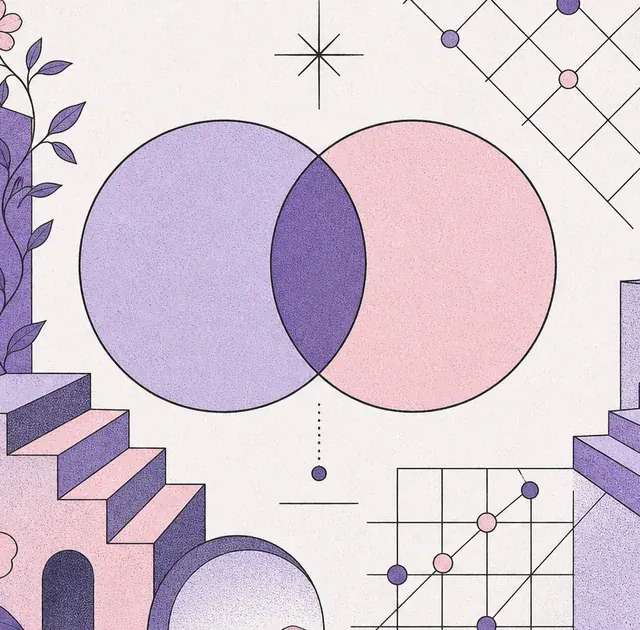
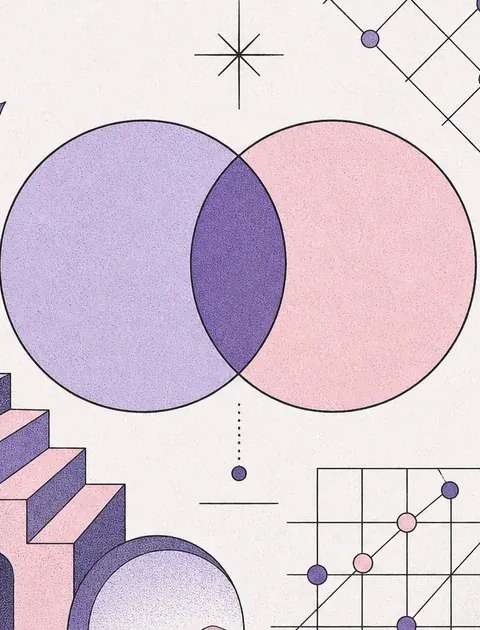
A strong partnership is more than two parallel journeys because the bond itself develops habits, needs, and pressure points that belong to the couple, not just to either person. Imagine two circles intersecting. Where they overlap, a third shape is born. That intersection is not merely a blend; it is its own precise mathematical field, governed by rules distinct from either circle. Relationships operate according to this principle. Even when you know your own motivations and understand your partner’s, the shared space between you can still behave in surprising ways. It may ask for a different pace, a different repair style, or a different kind of honesty than either partner would naturally choose alone. This is where the Third Entity becomes useful: it gives language to the pattern formed by the relationship itself.
This “third space” isn’t mystical fluff or poetic metaphor. In system theory, it’s the emergent property, the sum that is more complex than its parts. For numerology, which quantifies behavioral patterns via numbers, the Third Entity is an actual calculation using your individual core numbers.
Couples often find themselves playing out cycles, such as certain arguments, communication breakdowns, or odd bursts of collective creativity, that aren’t explained by either partner in isolation. This isn’t a flaw. It’s a sign that your relationship’s unique pattern is active and seeking acknowledgment. When mapped clearly, the Third Entity becomes an agreement: the ground rules by which your partnership thrives or struggles.
What Is the Third Entity in Numerology?
The Third Entity in numerology is the calculated relationship number that describes the shared behavioral signature created by two partners together. It is not a label for one person, a score of romantic success, or a simple average between two profiles. In numerology, each person is identified by core numbers. Your Life Path number pinpoints your foundational rhythm. Your Expression number spotlights your communication and core talents. These numbers offer a personal map, but translating them into relationship insight means observing how two maps combine. The Third Entity names the pattern that colors your shared choices, values, repair style, and communication habits. It helps explain why a couple can feel loving and aligned in one area while repeatedly looping through the same tension in another. In practical terms, it turns relationship chemistry into something you can discuss with more Clarity.
The Third Entity calculation doesn’t erase your individuality. Instead, it uses each partner’s Life Path and Expression numbers as inputs for a new computation. That output is not “his number” or “her number,” nor simply a midpoint between the two. Think of it as the behavioral signature of your partnership, the pattern that colors your shared choices, communication, and values.
The Numaura Couples Framework uses this combined result to surface:
- The relationship’s dominant vibe (e.g., Growth, Adventure, Stability)
- Predictable challenge cycles
- Aligned communication windows
Because this number is calculated from both partners’ active personal cycles, it shifts the perspective from “Who’s at fault?” to “What does our relationship need at this moment?”
How Is the Third Entity Calculated?
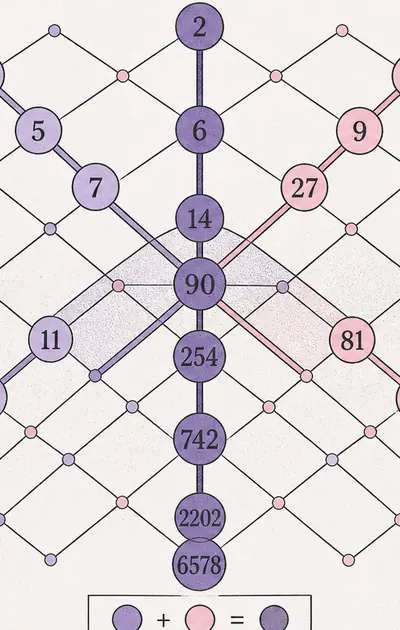
The Third Entity is calculated by combining both partners’ numerology inputs, especially Life Path and Expression numbers, into a shared relationship result. Although numerological formulas can feel abstract, the system is refreshingly structured. Numaura computes the Third Entity by mathematically combining Life Path and Expression numbers for both partners, so the result reflects both people's core direction and their default way of acting on it, not just one or the other. The calculation depends on your raw birthdates and full birth names, transformed into core numbers, which are then summed and sometimes reduced. If a Master Number, 11, 22, or 33, emerges, it is never reduced to a single digit and is never simplified further. This distinction matters because Master Numbers carry intensified relationship themes. The result is interpreted as a pattern of shared behavior, not a fixed prediction. It clarifies why certain Cycles arise and how partners can work with them in better Alignment.
The final Third Entity number is interpreted not as predictive fate, but as a reliable insight tool. Its purpose: To clarify why certain patterns arise, and how to work with them, not against them.
Let’s ground this in example. The system generates:
Ready to Begin Your Journey?
Your numerology has been waiting for you all along. The first step is simple...
These outputs provide shared language for discussing tensions, aspirations, and rhythms, moving away from blame and closer to mutual understanding.
Once you have the number itself, the more useful question becomes what it actually means for how the two of you communicate, pace intimacy, and repair after conflict. Numaura’s guide to reading your Third Entity number covers that interpretation layer.
Where Third Entity Patterns Stand Apart
Third Entity patterns stand apart because they do not judge a couple by static traits; they reveal the recurring Cycles that appear only inside the relationship. Countless partners report feeling unsupported or misunderstood by traditional compatibility tools. They may say, “We’re supposed to be perfect for each other, but it doesn’t feel that way.” The Third Entity flips the lens. It doesn’t judge the relationship by static traits but surfaces the recurring cycles, growth opportunities, and collaborative communication patterns that only appear in this union. This difference can be deeply validating. Instead of asking which partner caused the tension, the framework asks what the relationship pattern is trying to show both people. That shift can soften defensiveness and open space for shared responsibility.
For instance, two partners with independent, assertive Life Paths might find their Third Entity leans toward a number associated with cooperation or emotional learning, inviting the relationship as a whole to practice what neither partner prioritizes alone. It is not that either partner is failing; the relationship pattern is nudging both toward a joint lesson.
Master Numbers bring their own twist. If your Third Entity is an 11, 22, or 33, this always stays as a double-digit vibration and is never reduced to a single digit. These numbers carry intensified themes and opportunities for relationship growth, along with greater challenges. For a couple with a Third Entity of 11, for example, the relationship signature will consistently raise themes of intuition, higher communication, and emotional resonance, often cycling more intensely than in partnerships with single-digit Third Entities.
Mapping Your Relationship's Core Needs
The value of knowing a relationship’s Third Entity is simple: better alignment in real time.
Consider these potential benefits:
- Recognizing recurring argument cycles not as personal attacks, but as structural invitations for growth hidden in the Third Entity
- Timing important conversations or initiatives in tune with your relationship’s natural energetic “window”
- Honoring the distinct needs of your shared partnership, so you neither over-accommodate nor neglect your own or your partner’s individuality
This approach leads directly to better communication and increased self-trust. You can check out more about how Life Path numbers reflect behavioral tendencies in our Life Path Number meaning guide.
Typical Third Entity Numbers & What They Mean
Single-digit numbers surface nine core behavioral archetypes for relationships:
1: Independence, pioneering energy, shared ambition. Often a partnership hungry for autonomy and new projects.
2: Cooperation, emotional sensitivity, and partnership. Strong focus on peacekeeping and mutual support, sometimes too much accommodation.
3: Creative expression, playfulness, and communication. Lots of shared laughter, but potential for avoiding hard feelings.
4: Structure, reliability, home-building. Development of rituals, consistency, and safe routines. Occasional stubbornness.
5: Freedom, adventure, and risk-taking. A taste for travel or new experiences, paired with volatility if ungrounded.
See Your Full Blueprint
This is one piece of your pattern. A full Numerology Blueprint report maps your Life Path, Expression, and Soul Urge together for $20.
6: Service, nurturing, family focus. Tendency to turn partnership into a caregiving role, sometimes risking codependence.
7: Depth, analysis, spiritual inquiry. Tendency to interrogate deeper meanings and retreat from the world together.
8: Ambition, legacy-building, shared material goals. Partnerships that feel entrepreneurial or strategic. Sometimes struggles with power dynamics.
9: Compassion, global perspective, shared mission. Focus on giving back or working for something larger than yourselves.
If your relationship’s Third Entity is a Master Number:
11: Heightened intuition, visionary purpose, and frequent emotional highs and lows. Never reduced to a single digit; intensity is part of the path.
22: Mastery of building. Concrete shared projects, long-term investments. High stakes and patience required. Never reduced to a single digit.
33: Compassionate service, healing, and unconditional love. Often called “the master teacher” for its potential to model deep partnership. Never reduced to a single digit.
Steps for Couples Ready to Calculate Their Third Entity
If you’re ready to bring conscious attention to your relationship’s actual patterns, not just wishful thinking or social comparisons, the process looks like this:
- Gather both partners’ full birth names and birthdates. These will be used to determine each of your core Life Path and Expression numbers.
- Input this data into a structured tool or framework, such as the Numaura Couples Compatibility system.
- Review the calculated Third Entity number together, reading both the narrative summary and the challenge phrase.
- Open a conversation with your partner about how this shared signature matches or challenges your current experience.
Working with the Third Entity isn’t about “fixing” your relationship or bending it to fit someone else’s ideals. Instead, it’s an invitation to speak honestly about what happens between you, and how you can honor both similarities and differences.
Building Connection from Shared Insight
Many couples find that learning their Third Entity, laid out inside a full couples numerology report, lifts pressure from both partners. Fewer arguments become personal critiques. More exchanges sound like: “This is our shared pattern, so how do we work with it together?”
If you’d like to see your own unique Third Entity calculation and receive a relationship-specific summary, Numaura makes it easy to start, bring a new lens to your partnership and give your connection the language it’s always needed at Create Your Couples Profile.
Learning your relationship’s Third Entity will not box you in. It gives you a practical map for understanding your joint journey, one where both self and shared pattern are equally valued.