The exhaustion of living against your inner design
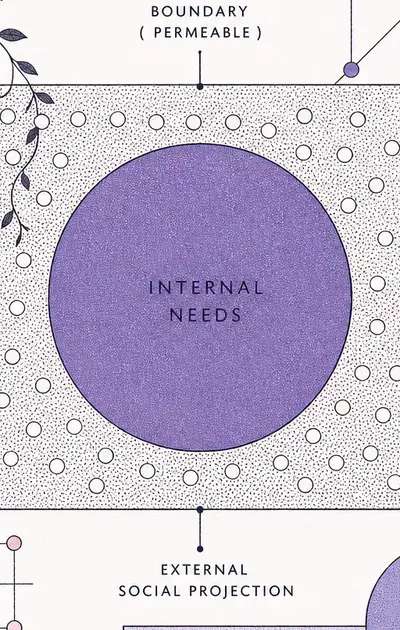
Exhaustion is often treated as a time management problem, but for many sensitive, self-aware people, it runs deeper than calendar overload. It comes from performing a version of yourself that was rewarded, approved, or required, while your actual inner drivers sit quietly in the background asking for air.
Societal Conditioning teaches you what is acceptable. Your Soul Urge points to what is honest. When those two forces are in conflict, life can start to feel like a long negotiation with yourself, one where every choice has to pass through guilt, comparison, duty, and the fear of disappointing someone.
This is why numerology can feel so relieving when it is used with care. It does not need to tell you who to become. It can help name the pattern that was already there. That sentence is not a rule. It is a mirror.
Essential Takeaways
- Societal Conditioning often rewards adaptation, while the Soul Urge reveals what restores your inner energy.
- Authenticity is not rebellion for its own sake. It is the practice of making choices that stop splitting you in half.
- Your Soul Urge number can help explain why certain expectations feel heavier than others.
- Master Numbers 11, 22, and 33 are never reduced in this context because their intensity carries a distinct inner assignment.
- Small acts of alignment, repeated consistently, can interrupt old cycles without forcing a dramatic life overhaul.
When approval becomes a cage
Most people are not conditioned through one dramatic moment. It happens through small lessons that accumulate. Smile when you are uncomfortable. Stay useful. Do not be too loud. Do not need too much. Be impressive, but not intimidating. Be independent, but always available. Be kind, but never inconvenient.
For a Core Believer, especially one who has spent years breaking family patterns or outgrowing inherited roles, this can feel painfully familiar. You may have learned how to read a room before you learned how to read yourself. You may have become fluent in other people’s moods, expectations, and disappointments, while your own desires got filed away as risky or selfish.
Societal Conditioning does not always look harsh. Sometimes it arrives as praise. You were the responsible one. The gifted one. The strong one. The peacemaker. The helper. The one who could be counted on. Those identities can feel comforting at first, until you notice they only leave room for the parts of you that serve the system around you.
The cost is subtle at first. You hesitate before telling the truth. You apologize before having a need. You stay in roles that drain you because leaving would require other people to adjust. Then, one day, the body refuses to keep cooperating. Fatigue, resentment, numbness, indecision, and a strange grief can all appear when your inner life has been overruled for too long.
That grief deserves respect. It is not weakness. It is the part of you that remembers there was supposed to be more room.
What Is the Soul Urge in Numerology?
The Soul Urge, sometimes called the Heart’s Desire number, is the numerology number calculated from the vowels in your full birth name, and it describes the private motivations that make you feel emotionally alive. In this tradition, vowels are linked with the inner current of the self: what you crave, what you value, what you protect, and what you may hide when acceptance feels uncertain. The Soul Urge does not describe your public image, job title, family role, or social mask. It points to the desire underneath those roles, whether that desire is freedom, beauty, safety, truth, service, depth, recognition, peace, intimacy, mastery, or spiritual meaning. Used with care, it gives language to needs that may have been dismissed as inconvenient, immature, or too intense. That language can reduce shame because it shows a pattern, not a personal defect.
The power of the Soul Urge is not that it gives you an excuse to ignore real responsibilities. It gives you objective permission to stop treating your authentic needs as random, inconvenient, or immature. When you can see a pattern clearly, shame loses some of its grip.
That phrase can be useful when you catch yourself slipping back into old conditioning. It gives language to the tension instead of letting the tension define you.
There is a reason this matters. People often try to heal by becoming more disciplined, more productive, or more emotionally controlled. Discipline has its place, but it cannot repair the pain of self-abandonment. A life built against your Soul Urge may look successful and still feel hollow.
Authenticity begins when you stop asking, “What version of me will keep everyone calm?” and start noticing, “What choice lets me stay connected to myself?”
Societal Conditioning speaks in borrowed rules
Conditioning usually sounds reasonable because it borrows the language of safety. It says you should be practical, loyal, grateful, humble, agreeable, realistic, or mature. None of those qualities are bad. The problem begins when they are used to shrink the truth of who you are.
A person with a strong need for independence may be told they are selfish. A person with a deep need for harmony may be told they are too sensitive. A visionary may be called unrealistic. A natural leader may be labeled controlling before they learn how to hold power cleanly. A truth-teller may be punished for disrupting the family story.
Over time, the nervous system learns to associate authenticity with danger. You do not merely think, “I should stay quiet.” Your body tightens. Your throat closes. Your stomach drops. The old rule is not just mental. It has become physical.
This is why affirmations alone often fall flat. If the deeper pattern says, “Being myself costs me love,” then repeating a positive sentence may not reach the wound. You need evidence. You need repeated experiences where your truth does not destroy connection. You need clear language for the part of you that was trained to perform.
Numerology can offer that language without forcing a diagnosis onto your life. A Soul Urge number does not reduce you to a single trait. It gives you a starting point for compassion, especially when you have been judging yourself through standards that were never built for your nature.
Ready to Begin Your Journey?
Your numerology has been waiting for you all along. The first step is simple...
Authenticity is not the same as impulse
Authenticity is often misunderstood. It does not mean saying every feeling out loud, quitting every obligation, or refusing compromise. That is not freedom. That is reactivity dressed as honesty.
True authenticity has a steadier quality. It asks you to act from inner consent, not from automatic fear. It helps you notice the difference between a genuine yes and a survival yes. It makes space for responsibility, but it does not confuse responsibility with self-erasure.
This distinction matters for pattern breakers. When you have lived under heavy conditioning, the first rush of self-recognition can feel intense. You may want to change everything at once. You may feel anger at the years you spent editing yourself. Anger can be clean information, but it does not need to make every decision for you.
The Soul Urge gives you a calmer point of reference. It asks, “What keeps showing up beneath the noise?” Not the mood of the day. Not the approval you want this week. Not the identity you use to protect yourself. The deeper current.
For example, if a person’s Soul Urge centers on peace, authenticity may require fewer chaotic commitments and firmer boundaries. If it centers on expression, authenticity may require speaking, making, teaching, or creating even before confidence feels complete. If it centers on service, authenticity may require giving in ways that do not turn into martyrdom.
Your number is not a command. It is a pattern marker. Used well, it helps you stop arguing with needs that keep returning.

Why Does Your Body Know Before Your Mind Agrees?
Your body often knows before your mind agrees because conditioning is stored not only as a belief, but as a practiced physical response to safety, belonging, and threat. Many people discover their Soul Urge after years of trying to explain a feeling they could not justify. On paper, everything may look fine: the relationship is stable, the career is respectable, the family role is familiar, and the routine works. Yet something inside keeps contracting. That contraction may show up as procrastination, irritation, envy, fatigue, or a repeated fantasy of disappearing. It may appear when you say yes too quickly, or after a conversation where you performed ease while swallowing the truth. The mind can argue for the familiar, but the body often reveals where compliance has replaced alignment. Listening to that signal does not mean every reaction becomes an order; it means the signal deserves honest attention before you override it.
Societal Conditioning trains you to override those signals because they might inconvenience the group. Your body, though, keeps score in plain language. Expansion feels different from compliance. Peace feels different from numbness. Devotion feels different from obligation.
A helpful way to work with this is to stop asking whether your reaction is right and start asking what it reveals. Your reaction may not give you the final answer, but it often points toward the part of you that needs attention.
Try watching for three signals across one week. Notice what drains you faster than it should. Notice what gives you energy even when it takes effort. Notice where you become strangely small, careful, or edited. These are clues, not accusations.
When paired with your Soul Urge, those clues can begin to form a more honest picture. It may be your inner design asking you to stop calling its needs a problem.
The numbers as permission slips, not personality boxes
Each Soul Urge number carries a different kind of longing. A Soul Urge 1 often seeks self-direction and the courage to choose without constant permission. A 2 seeks emotional attunement, partnership, and gentle trust. A 3 needs expression, joy, and the room to give language to feeling. A 4 craves stability, order, and earned security.
A 5 longs for freedom, variety, and lived experience. A 6 seeks love, responsibility, and meaningful care, but must watch the pull toward over-functioning. A 7 needs depth, solitude, and truth beyond surface noise. An 8 is drawn toward power, capacity, and material impact. A 9 carries a longing for compassion, release, and a wider human view.
Master Numbers add more intensity. A Soul Urge 11, 22, or 33 is never reduced to a single digit in this context. These numbers carry a stronger charge, which means their inner pressure can feel louder, more demanding, and harder to ignore. The person may sense a larger call, but also feel more sensitive to misalignment.
Soul Urge 11 often brings heightened intuition, emotional perception, and a need to live in truth rather than imitation. Soul Urge 22 carries the urge to build something meaningful and practical from a powerful inner vision. Soul Urge 33 is tied to compassionate responsibility, healing presence, and love expressed through mature service. None of these are badges of superiority. They are higher-voltage assignments, and higher voltage requires better grounding.
This is where many people misunderstand numerology. The number is not there to flatter you. It is there to help you become honest. If you want a fuller reference for each number, Numaura’s guide to the Soul Urge number meaning can support deeper reflection without turning your life into a rigid label.
How conditioning distorts each inner need
Conditioning rarely erases the Soul Urge. It distorts it. The need remains, but it gets expressed through fear.
See Your Full Blueprint
This is one piece of your pattern. A full Numerology Blueprint report maps your Life Path, Expression, and Soul Urge together for $20.
A person with an inner need for independence may become defensive instead of self-led. Someone who longs for connection may people-please instead of asking for mutual care. A creative soul may turn their gift into performance, chasing applause while feeling unseen. A stability-driven person may cling to control because uncertainty feels unsafe.
The same pattern appears in different clothes. Freedom becomes escape. Love becomes obligation. Power becomes armor. Service becomes self-neglect. Wisdom becomes isolation. Peace becomes avoidance.
This is why self-judgment is such a poor teacher. It looks at the distorted behavior and says, “What is wrong with me?” A more useful question is, “What need is trying to survive here?”
That question softens shame without excusing harm. It lets you take responsibility from a grounded place. If your old pattern has hurt you or others, you can repair it while still honoring the original need beneath it. The Soul Urge helps separate the clean desire from the conditioned strategy.
For a pattern breaker, this separation can feel life-changing. You are not too much because you need depth. You are not selfish because you need freedom. You are not weak because you need tenderness. You are not difficult because your spirit resists a life built only around approval.
How Can You Choose Yourself Without Burning Everything Down?
Choosing yourself without burning everything down means making small, repeatable changes that honor your Soul Urge while respecting the real relationships, duties, and limits in your life. Changing your relationship to Societal Conditioning does not require a dramatic announcement or a sudden break from everyone who knows the old version of you. In many cases, the most sustainable changes are quiet, consistent, and specific. They teach your nervous system that authenticity can be safe in small doses before it becomes a larger way of living. Start with one place where you feel the split between your outer role and inner truth, but do not choose the most explosive area first. Choose a manageable edge: how quickly you reply, how often you explain yourself, how you spend one evening a week, or how honestly you answer when someone asks what you want.
Then work through a simple sequence.
A five-step alignment practice
- Name the inherited rule. Write the sentence you feel pressured to obey, such as “I must be available to be loved” or “I cannot disappoint people.”
- Name the Soul Urge need. Use plain language, such as freedom, peace, expression, loyalty, depth, or respect.
- Choose one small behavior that honors that need. Keep it measurable and realistic.
- Expect discomfort without treating it as a stop sign. Old conditioning often protests when it loses control.
- Record the result. Notice whether the feared outcome actually happened, and how your body felt afterward.
This practice is simple, but it can be powerful because it turns authenticity into lived proof. You are not trying to convince yourself through theory. You are gathering evidence that a truer life is possible.
Permission is not the same as approval
One of the hardest lessons in pattern breaking is that permission may arrive long before approval does. You may understand your truth before your family respects it. You may feel ready to change before your social circle knows what to do with the new version of you. You may set a boundary and still feel guilty afterward.
That guilt does not always mean you have done something wrong. Often, it means you have violated an old agreement to stay small, useful, silent, or predictable. The guilt is a withdrawal symptom from the role you are leaving.
Approval asks other people to be comfortable with your growth. Permission asks you to stop making their comfort the final authority. The difference is profound.
This does not mean you become careless with the people you love. It means you stop confusing love with constant self-editing. Healthy connection can survive honesty, limits, and change. Fragile control often cannot.
Your Soul Urge can support you here because it brings the conversation back to inner truth. When the old fear says, “Who do you think you are?” the number answers in a quieter way: “This pattern has always been part of me.”
That recognition can be enough to take the next honest step.
Building a life your inner self can inhabit
Authenticity becomes real through structure. Not rigid structure, but supportive structure. The kind that protects what matters before the world crowds it out.
If your Soul Urge points toward creativity, your structure may include protected time for expression before your energy is spent on everyone else. If it points toward connection, your structure may include honest conversations instead of silent resentment. If it points toward solitude, your structure may include regular space away from noise without apologizing for it. If it points toward leadership, your structure may include decisions that train you to trust your own authority.
This is where many people stumble. They wait for confidence, then hope their life will change. More often, confidence arrives after repeated acts of self-respect. The new life is built through choices that may feel awkward at first.
Bring the Whole Family In
Patterns get clearer in context. A Family Blueprint covers up to 4 members for $40, so everyone's Cycles line up on one map.
You do not have to become fearless. You only have to become more loyal to the truth than to the old script.
The script may still speak. It may warn you that you are being too sensitive, too ambitious, too intense, too independent, too needy, or too different. Let it speak. Then check the evidence. Does following that script create peace, or only compliance? Does it build love, or only maintain access? Does it protect your future, or just preserve a familiar discomfort?
Clarity often comes from the body’s answer.
When the old cycle tries to pull you back
Every pattern breaker reaches a point where the old cycle tries to reassert itself. This can happen after a boundary, a career shift, a relationship change, or even a private decision to stop betraying yourself. The system that benefited from your old role may react, and your own inner critic may join in.
This is normal. It does not mean the change is wrong.
Old conditioning is repetitive because repetition is how it survived. It will use familiar thoughts. “You are making this too big.” “You should be grateful.” “You will lose people.” “You cannot trust yourself.” These thoughts may feel convincing because they have been practiced for years.
The response is not to fight every thought. That becomes exhausting. The response is to return to your chosen reference points: your body, your values, your Soul Urge, and the real-world outcomes of your new choices.
Keep asking, “Does this choice bring me closer to alignment or back into performance?” That single question can interrupt a cycle before it gathers speed.
Some days, alignment will look brave. Some days, it will look ordinary. Drinking water before answering the demanding message. Taking a full breath before saying yes. Telling the truth in one sentence instead of over-explaining for ten minutes. Leaving space in the calendar because your inner life is not optional.
These small choices count. They are how the old structure loosens.
Let your number start a more honest conversation
A Soul Urge reading is most useful when it becomes personal, not theoretical. The goal is not to memorize meanings or use a number as a fixed identity. The goal is to see where your life has been shaped by fear of rejection, then gently choose a truer response.
For someone carrying years of Societal Conditioning, this can feel like receiving permission from a neutral source. Not because the number has authority over you, but because it reflects something you may have felt before you had language for it. That reflection can be deeply healing.
If you are ready to see your Soul Urge in the context of your full numerology profile, you can create your personal chart through Numaura’s individual profile experience. Use it as a mirror for the patterns you are already sensing, especially the places where your energy has been drained by living against your inner design.
The point is not to become a perfect version of yourself. Perfection is often just conditioning in nicer clothing. The point is to stop abandoning yourself in order to be acceptable.
Your authenticity does not need to be loud to be real. It may begin as a private decision, a cleaner boundary, a more honest sentence, or a quiet refusal to keep performing ease when your soul is asking for truth.
Societal Conditioning taught you how to survive inside other people’s expectations. Your Soul Urge helps you remember how to live from the inside out. That remembering is not selfish. It is the start of a life that can finally hold all of you.