Most social burnout begins long before the party, the meeting, the family dinner, or the group chat. It begins in the gap between who you have learned to perform and what your inner self actually needs.
That gap can be subtle. You may be the person who knows how to make others comfortable. You may be quick with warmth, jokes, questions, helpfulness, eye contact, or calm leadership. People might describe you as social, confident, expressive, available, easy to talk to. Some part of you may even enjoy that role.
Then your body tells the rest of the story.
After too much contact, you become foggy. Irritable. Overstimulated. A little sad for no obvious reason. You cancel plans and feel guilty. You crave silence but worry that needing space makes you difficult. You wonder why connection, something you value deeply, can leave you feeling so far from yourself.
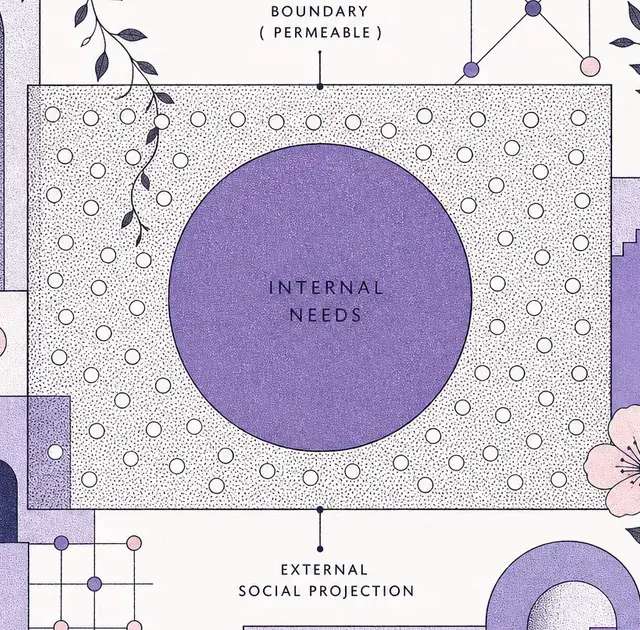
Numaura looks at this through the relationship between your Personality Number and your Soul Urge Number. Your Personality Number describes the outer signal people tend to receive from you. Your Soul Urge points to the internal driver beneath your choices, longings, and emotional nourishment. When those two numbers tell very different stories, your social energy can become confusing, even to you.
Core Takeaways
- Your social capacity is not the same as your social skill.
- The Personality Number shows the energy people often expect from you.
- The Soul Urge Number reveals what actually restores you from the inside.
- Social exhaustion often comes from overperforming an outer identity that your inner self cannot sustain.
- You can protect connection without abandoning your need for space, depth, or quiet.
The extrovert label can become a cage
The word extrovert gets used too casually. It often means “talkative,” “friendly,” “not awkward,” or “good in groups.” Those are behaviors, not proof of endless social fuel.
Plenty of people who appear extroverted are simply well trained. They learned early that being pleasant kept the peace. They learned to read a room, soften tension, keep conversations alive, and make themselves useful. They became fluent in social survival, then other people mistook that fluency for unlimited capacity.
This is especially tender for pattern breakers. If you grew up in a family system where silence was judged, emotional needs were minimized, or approval came from being agreeable, your outer self may have become a polished social instrument. You know how to show up. You know how to be the one who adjusts.
But adjustment has a cost.
When the outside world keeps rewarding your performance, the inner self can start to disappear behind it. You might not notice at first. You say yes because you can. You listen because you are good at it. You host, help, reply, support, translate, and absorb. Then one day you realize you are known by everyone and felt by almost no one, including yourself.
That realization is not failure. It is data.
What Is the Personality Number in Social Capacity?
Your Personality Number is the numerology calculation that describes the outer signal people usually read from you first. It is calculated from the consonants in your full birth name and, in Numaura’s system, points to the qualities others may notice before they understand your deeper motives. This number is not fake, and it is not a dishonest mask. It works more like your social doorway: the first tone of your presence, the style of contact, and the impression that forms around you. Some people have a doorway that feels bright, expressive, and available, the kind of presence that answers a group text with a joke before anyone else responds. Others may feel composed, private, unusual, serious, magnetic, nurturing, or precise. In social capacity work, the Personality Number matters because people often build expectations from this first signal, then assume you have the stamina to keep offering it.
The trouble starts when people assume the doorway is the whole house.
A person with a socially warm Personality Number may attract constant invitations, confessions, requests, and expectations. A person with a polished or competent Personality Number may become the unofficial organizer, counselor, fixer, or emotional translator. A person with a charismatic Personality Number may be expected to perform energy on demand, even when their inner world is asking for rest.
If your outward number suggests sociability, people may project stamina onto you. They see your presence, not the recovery time required after it.
That distinction matters. Social energy is not measured by how well you interact. It is measured by how much of yourself remains available after interaction.
For a deeper look at the outer social signal, Numaura’s guide to the Personality Number meaning explains how this calculation can reflect first impressions, public identity, and the traits others may assume are effortless for you.
What Is the Soul Urge Number Beneath the Performance?
The Soul Urge Number is the numerology calculation that points to what nourishes you from within. It is calculated from the vowels in your full birth name and speaks to the private longings, emotional needs, and inner drivers that may not be obvious to other people. This is especially true if you have spent years being praised for a different presentation. Your Soul Urge may need peace while your Personality Number appears lively. It may need depth while others keep pulling you into light social contact. It may need independence while your outer self seems endlessly supportive, the kind of independence that shows up as needing to eat a meal alone without narrating it to anyone. It may need devotion, artistry, truth, order, intimacy, service, or spiritual space. In social capacity work, the Soul Urge shows what restores you after contact, and what becomes painful when ignored too long.
The Soul Urge is not always loud. Many people hear it only after they burn out.
Ready to Begin Your Journey?
Your numerology has been waiting for you all along. The first step is simple...
That is why the disconnect can feel so disorienting. You may genuinely care about people and still feel depleted by constant access. You may enjoy being included and still dread the pressure to be “on.” You may love your friends and still need long stretches where no one needs anything from you.
This does not make you cold. It means your inner driver has requirements.
A Soul Urge disconnect often shows up as resentment without a clear villain. Nobody did anything wrong, exactly. People are only responding to the version of you they have been allowed to know. The pain comes from realizing that version has been overextended.
Why Does Social Exhaustion Really Begin Before the Event?
Social exhaustion often begins before the event because the deeper drain comes from inner contradiction, not only from noise, people, or plans. Too many conversations, too much small talk, and too many events in one week can matter, but they are rarely the full pattern. Your body tires faster when it has to maintain an outer frequency that conflicts with an inner need, the way a smile held slightly too long starts to ache in the jaw before the conversation even ends. If your Personality Number broadcasts openness while your Soul Urge needs privacy, each interaction may ask you to stretch beyond your true capacity. If your Personality Number feels light and entertaining while your Soul Urge craves meaning, casual socializing may leave you strangely underfed. If your Personality Number appears strong and capable while your Soul Urge longs to be held, being admired without being supported can become exhausting.
The nervous system notices these mismatches.
It notices when you laugh longer than you want to. It notices when you answer messages before you have checked in with yourself. It notices when you become the group’s emotional anchor while your own feelings wait in the corner. It notices when you say “I’m fine” because the socially accepted version of you has no room for a more honest answer.
The body keeps score in small ways. Tight shoulders. Shallow breathing. Headaches after gatherings. A need to disappear after being praised. Sudden irritation when someone asks a simple question. A feeling of being invaded by normal human contact.
These signals are not proof that you dislike people. They are proof that your boundary system is asking to be believed.
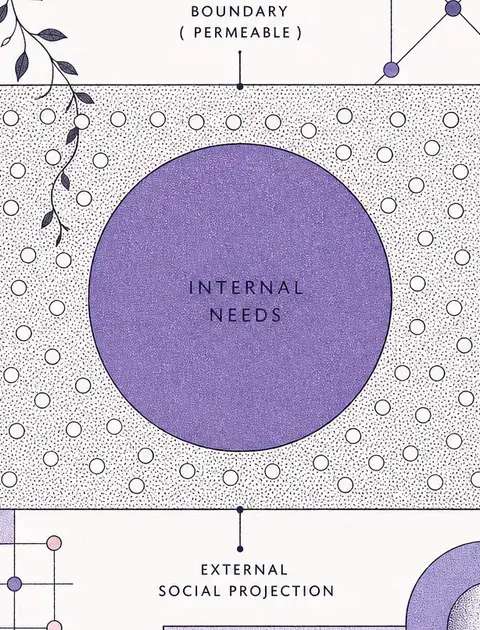
The Soul Urge disconnect: why being liked can still feel lonely
Being liked for your outer self can feel comforting for a while. It proves you are acceptable. It gives you a role. It can even offer safety, especially if younger versions of you had to earn belonging.
But being liked is not the same as being known.
When your Personality Number and Soul Urge pull in different directions, people may gather around the part of you that is easiest to receive. They may love your humor, your warmth, your strength, your calm, your intensity, your insight, or your reliability. Yet the part of you that needs something more specific may remain hidden.
This is the loneliness that can exist inside a full calendar.
You may be surrounded by people who care about you and still feel starved for the kind of contact your inner self needs. A quiet Soul Urge may want fewer people and more sincerity. A freedom-seeking Soul Urge may need relationships that do not punish space. A service-oriented Soul Urge may need to be reminded that care can move both ways. An expressive Soul Urge may need a place where creativity matters more than social approval.
Pattern breakers often carry an extra layer here. You may be the first person in your family line to say, “My capacity matters too.” That sentence can feel radical if you were taught to equate love with self-erasure.
Numaura’s essay on societal conditioning and Soul Urge permission speaks directly to this tension, especially for people who are unlearning the belief that external approval should outrank inner truth.
Social capacity is not a fixed personality type
The extrovert myth says you are either energized by people or drained by people. Real life is less tidy.
You may be energized by the right people and drained by performative access. You may love deep conversation and dislike unstructured group noise. You may feel alive when teaching, creating, collaborating, or celebrating, then need a full day of quiet afterward. You may be socially brave but energetically sensitive.
Capacity changes with context. It changes with grief, stress, sleep, hormones, workload, trust, and emotional safety. It changes when you are around people who listen well versus people who unconsciously extract.
See Your Full Blueprint
This is one piece of your pattern. A full Numerology Blueprint report maps your Life Path, Expression, and Soul Urge together for $20.
Your numerology profile does not trap you in a type. It gives you language for patterns you may already feel.
A Personality Number can show why people keep assuming you have more availability than you do. A Soul Urge Number can show why certain environments restore you while others leave you flattened. Together, they help you stop treating your depletion as a character flaw.
There is relief in that. Not the shallow kind that says, “This is just who I am, so nothing has to change.” The deeper kind that says, “Now I can care for myself with more honesty.”
Reading the mismatch without judging either side
It can be tempting to make the Personality Number the villain. After all, if the outer self keeps attracting the wrong expectations, it seems logical to reject it.
But the outer self has protected you. It helped you belong. It helped you communicate. It may have helped you survive environments where your full truth was not welcome. Even if it now needs adjustment, it deserves respect.
The Soul Urge also deserves respect, but not as a tyrant. Inner needs are real, yet they still need mature expression. If your Soul Urge needs space, the answer is not vanishing without care. If it needs depth, the answer is not judging every casual interaction as meaningless. If it needs freedom, the answer is not avoiding all commitment.
Alignment asks both parts to speak with each other.
Your Personality Number can become a chosen expression rather than an automatic performance. Your Soul Urge can become an honored inner compass rather than a quiet ache that only speaks through exhaustion. The shift is subtle at first. You stop asking, “What do they expect from me?” and begin asking, “What kind of presence can I offer without leaving myself behind?”
That question changes everything.
A practical audit for your social energy
A social capacity audit does not need to be dramatic. It works best when it is honest, specific, and repeated over time.
Start by looking at your last ten social interactions. Include texts, calls, meetings, family visits, dates, friend time, work events, and online exchanges. Your body does not always separate “real life” contact from digital access, especially if emotional labor is involved.
For each interaction, notice three things.
1. What did people receive from me?
Did they receive humor, listening, advice, leadership, reassurance, enthusiasm, caretaking, performance, warmth, problem solving, or calm? This points toward your Personality Number in action. It shows the signal you offered or felt pressured to offer.
Do not judge the answer. Just name it.
2. What did I need underneath that?
Maybe you needed quiet. Maybe you needed to be asked a real question. Maybe you needed to leave earlier, speak honestly, stop managing someone’s feelings, or be allowed to participate without carrying the mood.
This brings the Soul Urge into the room.
3. What was the aftertaste?
Pay attention to the hour after contact. Did you feel clear, warm, tense, resentful, proud, scattered, heavy, seen, invisible, energized, or relieved that it ended? The aftertaste often tells the truth faster than the mind does.
If a pattern repeats, believe it.
Bring the Whole Family In
Patterns get clearer in context. A Family Blueprint covers up to 4 members for $40, so everyone's Cycles line up on one map.
One draining interaction may be circumstantial. Ten draining interactions with the same emotional shape point to a capacity issue, a boundary issue, or a mismatch between your outer role and your inner requirements.
The permission you may not have received
Many people do not need a harsher productivity system for their social lives. They need permission to stop confusing availability with love.
You can be caring and less reachable. You can be warm and still leave early. You can be socially gifted and still require solitude. You can be the person others trust without becoming the place where everyone empties their unprocessed emotions.
This may feel uncomfortable at first because old patterns often argue back. The inner critic may say you are being selfish. A family role may tug at you. Friends may need time to adjust. Your own nervous system may mistake peace for danger if chaos used to feel familiar.
That is where cycle breaking becomes practical.
You do not need to announce a new identity to everyone. Begin with small, clean choices. Pause before saying yes. Let a message sit until you have the capacity to answer. Tell a friend you can talk for twenty minutes instead of pretending you have all night. Choose one gathering instead of three. Stop apologizing for needing recovery time.
These are not rejections of others. They are acts of self-return.
If your numbers include 11, 22, or 33
When a Personality Number or Soul Urge Number calculates to 11, 22, or 33, Numaura treats it as a Master Number. It is never reduced to a single digit in the core interpretation.
Master Numbers carry a heightened vibration, which means the pattern may feel intensified. A Master Number Personality can create a strong outer impression, sometimes more magnetic, sensitive, commanding, inspiring, or emotionally charged than the person realizes. A Master Number Soul Urge can create a deep internal pull toward purpose, healing, vision, responsibility, or spiritual integrity.
That intensity can complicate social capacity.
People may feel drawn to you and assume access. You may sense more in a room than you can easily explain. You may be praised for presence while privately needing more recovery than others expect. The lesson is not to shrink your energy. It is to care for it with steadiness.
Master Numbers often ask for cleaner boundaries, not bigger performance.
Rewriting the social contract
Once you understand the difference between your Personality Number and Soul Urge, your relationships may begin to reorganize. Not because you are abandoning people, but because you are changing the terms of access.
A healthier social contract might sound like this: “I will show up with sincerity, but I will not perform energy I do not have.”
That sentence can be lived in many ways. You might tell a friend, “I want to see you, and I only have energy for something quiet.” You might say, “I am not available to talk tonight, but I can check in tomorrow.” You might choose smaller gatherings, deeper conversations, more recovery space, or clearer endings.
Some people will adapt easily. They may even be relieved to meet a more honest version of you. Others may resist because they benefited from your overextension. Their discomfort does not automatically mean you are wrong.
The old pattern may have taught people that your yes was effortless. The new pattern teaches them that your presence is intentional.
There is grief in this shift. You may mourn the years spent performing ease. You may feel anger about how long your needs went unnamed. You may notice relationships that only worked when you were the most convenient version of yourself.
Turn Insight Into Action
You have read the theory. A personalized report translates it into your own numbers and your next Cycle.
Let the grief tell the truth without turning it into self-blame. You did what you knew how to do. Now you know more.
Turning insight into daily alignment
Social energy becomes easier to manage when you stop treating every invitation as a moral test. A request is not a command. A text is not an emergency just because it arrived. A group plan is not proof of your worth.
Before you agree to anything, try a three-part pause.
Ask your body whether it expands, contracts, or goes numb when you imagine saying yes. Ask your mind whether the timing is realistic. Ask your inner self whether the interaction supports the kind of connection you actually want.
If all three answers are clear, respond from that clarity. If not, wait.
You can also create social categories that match your real capacity. Some people are nourishing in short doses. Some are wonderful one-on-one but draining in groups. Some are safe for joy but not for vulnerability. Some require so much emotional labor that access needs to be limited.
This is not cold. It is honest relational care.
The goal is not to become less loving. The goal is to stop using self-abandonment as proof that you care.
Your numbers can name what your body already knows
The Personality Number and Soul Urge Number are not meant to overrule your lived experience. They give form to what your body, relationships, and patterns have been trying to tell you.
If your outer social signal has been louder than your inner need, you are allowed to recalibrate. You are allowed to be less available than people assumed. You are allowed to disappoint expectations that were built on an incomplete version of you.
That is often where the real healing begins. Not in becoming someone new, but in letting the hidden self participate in your choices.
If you want to see the exact relationship between your outer presentation and inner driver, you can calculate your full profile with Numaura’s free numerology calculator. Use it as a mirror for your current season, especially if you are ready to stop overextending your social energy and start choosing connection from a place of truth.
A final note for the pattern breaker
You do not have to prove your goodness through constant access.
Read that again slowly.
The people who truly meet you will not need you to stay overextended in order to feel loved. They may need communication. They may need reassurance while you change. They may need time to understand your boundaries. But they will not require your exhaustion as the price of connection.
Your social capacity is sacred information. It tells you where you are aligned, where you are performing, where you are hungry, and where you have been asking your nervous system to carry too much.
The extrovert myth loses power when you stop accepting other people’s reading of you as the full truth. Your Personality Number may explain the invitation. Your Soul Urge explains the cost. Between them, a more honest life becomes possible.
Not smaller. Not colder. More true.